Research Focus Areas
Solar Blind Photodetectors
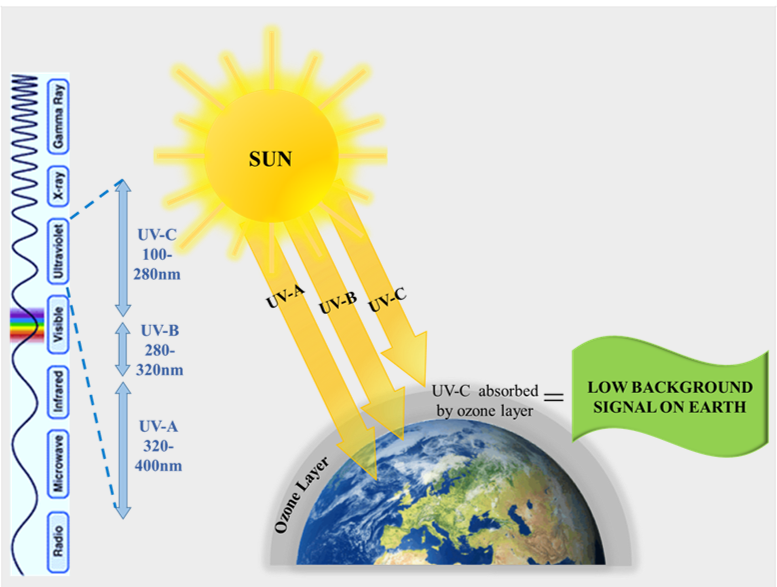
Solar-blind photodetectors are advanced UV sensors designed to selectively detect deep-ultraviolet (UV-C) radiation below 280 nm while suppressing responses to visible and solar-background radiation. Our research focuses on developing high-performance solar-blind photodetectors using wide-bandgap semiconductor materials and engineered heterostructures. We investigate materials engineering, defect and interface control, and device architecture to enhance photoresponsivity, response speed, and detectivity. Particular emphasis is placed on understanding defect-mediated charge transport and carrier dynamics. Our goal is to develop fast, sensitive, low-noise, and stable UV-C photodetectors for applications in flame detection, environmental monitoring, secure communication, and space-based sensing.
Two-Dimensional (2D) Materials & van der Waals Heterostructures
Power Devices
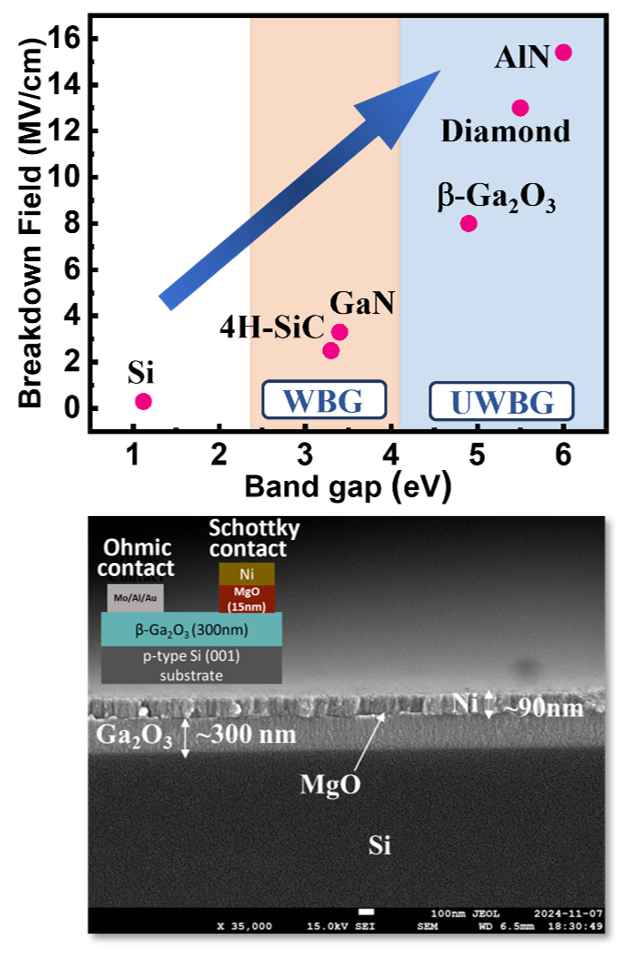
The field of power electronics encompasses a vast footprint with a wide range of applications working in the domain of high power and high voltage such as in electric aircraft, hybrid electric vehicles, sophisticated controllers for power grid stations and rugged radars. β-Ga2O3, an ultra wide band gap semiconductor, is the future of power electronics owing to its advantageous properties including a tuneable bandgap (4.5–5 eV), a high critical breakdown field (Ec = 8 MV/cm), and outstanding chemical and thermal stability. Interfacial defects degrade the device performance by affecting electrical characteristics such as increasing the on-resistance, reducing the breakdown voltage, and increasing leakage current. Our work primarily is focused towards achieving full efficiency of β-Ga2O3 based power schottky diode and power p-n heterojunction diode by implication of interfacial engineering strategies to reduce the interfacial defects present at metal-semiconductor (MS), semiconductor-semiconductor (SS), and oxide-semiconductor (OS) interface.
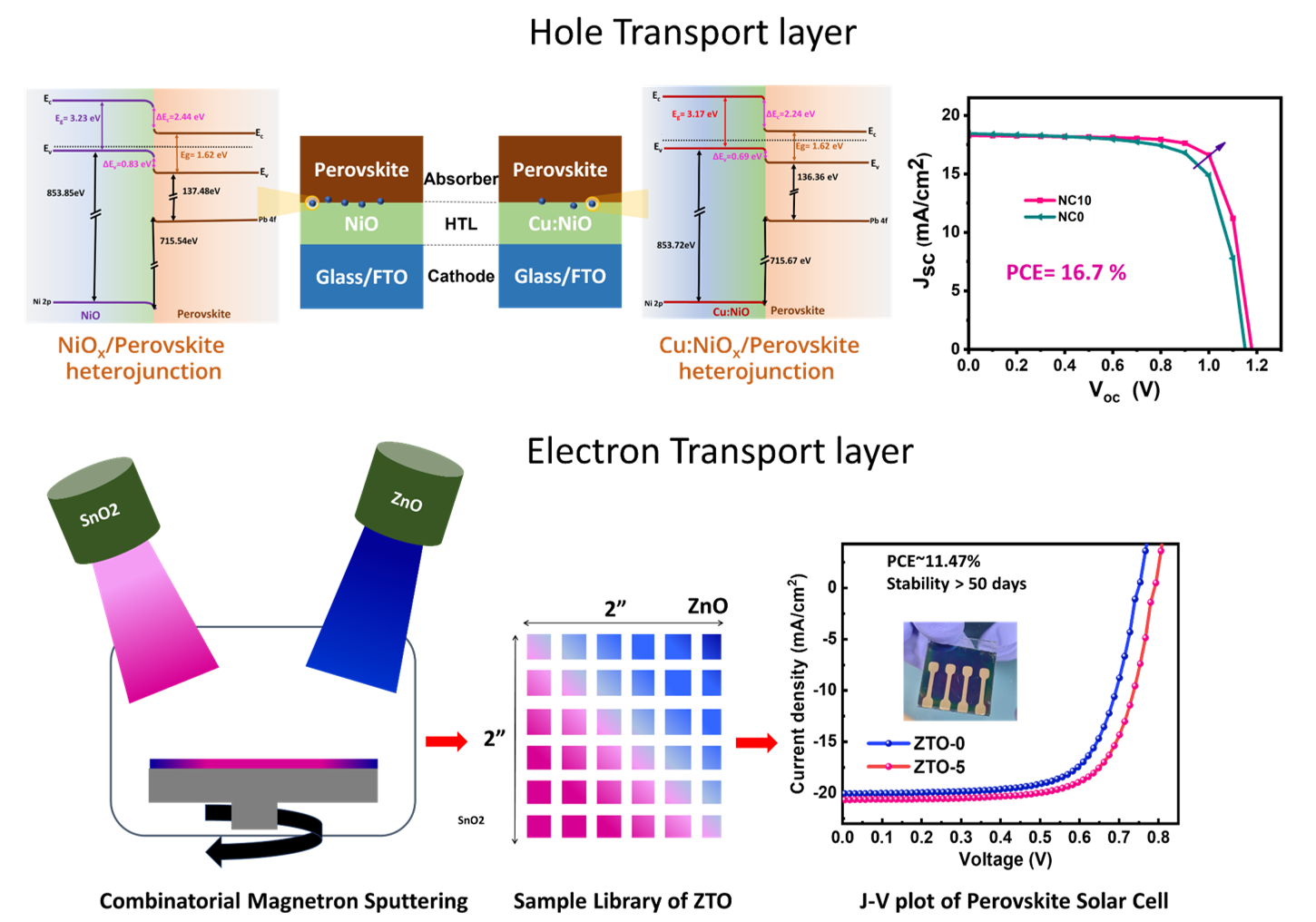
Perovskite Solar Cells & Interfacial Engineering
Research in this field focuses on engineering inorganic charge-selective interfaces for high-performance perovskite solar cells, with emphasis on controlling energy-level alignment, defect states, carrier extraction, and interfacial recombination. Cu-doped NiOₓ and Zn–Sn–O (ZTO) are investigated as hole- and electron-selective layers, respectively, with triple-cation perovskites as the absorber. Particular attention is given to tailoring composition, doping, oxygen stoichiometry, and interfacial electronic structure to achieve efficient and selective charge transport, suppressed recombination, and improved photovoltaic performance and stability.